It is the story of coal towns and steel mills.
It is the story of assembly lines and grain elevators.
It is the story of American labor and American industry.
And it is the story of a 115-ton locomotive that beat the odds.
The American Locomotive Works of Schenectady, NY built over 1,500 S-2 class diesel-electric switching locomotives between 1940 and 1950. The incredibly successful design helped complete the transition from steam to diesel power on railroads across the United States. Over 70 years later, the number of S-2 survivors has dwindled. They are now highly endangered with losses continuing annually. Unfortunately, many remaining examples are used without adequate conservation planning.
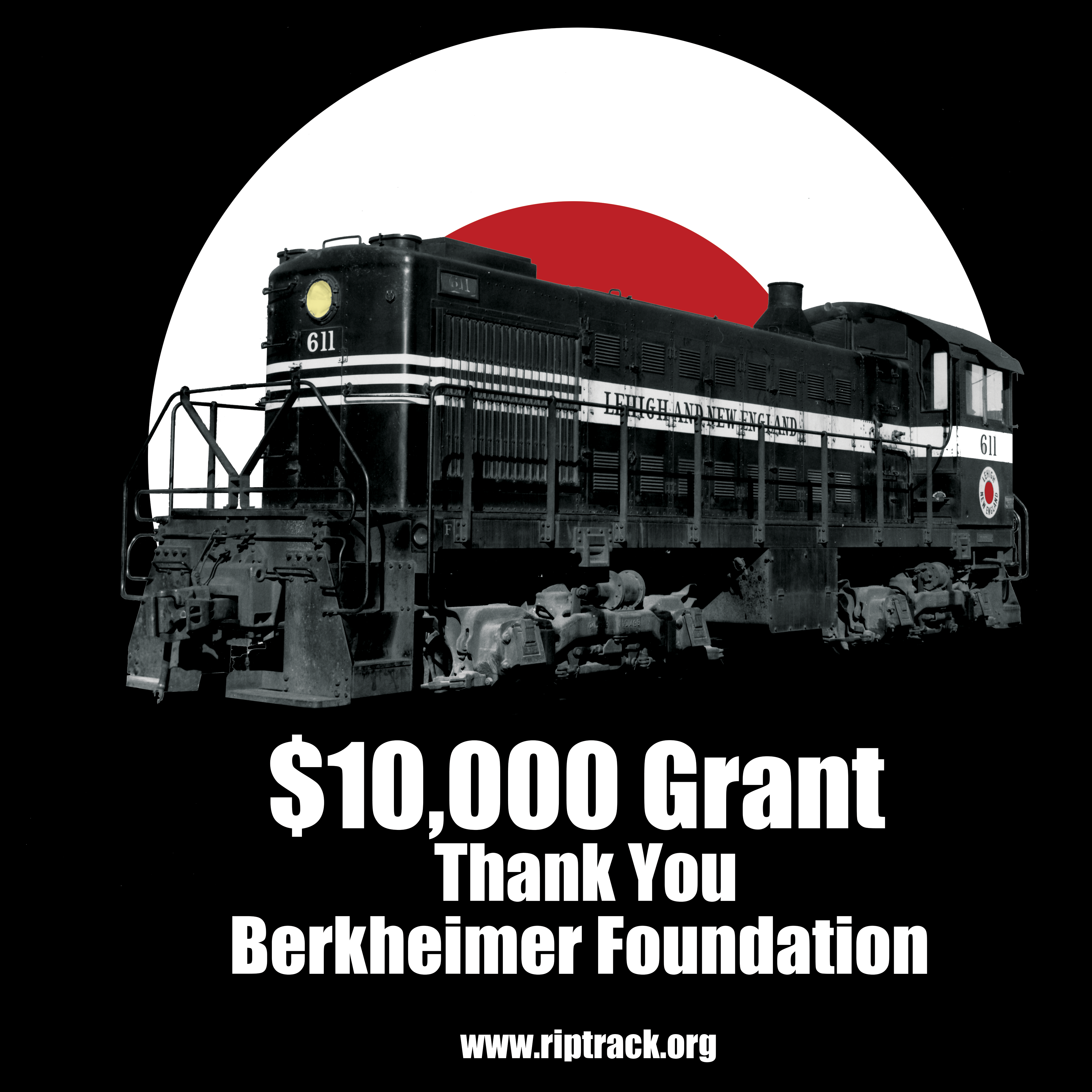
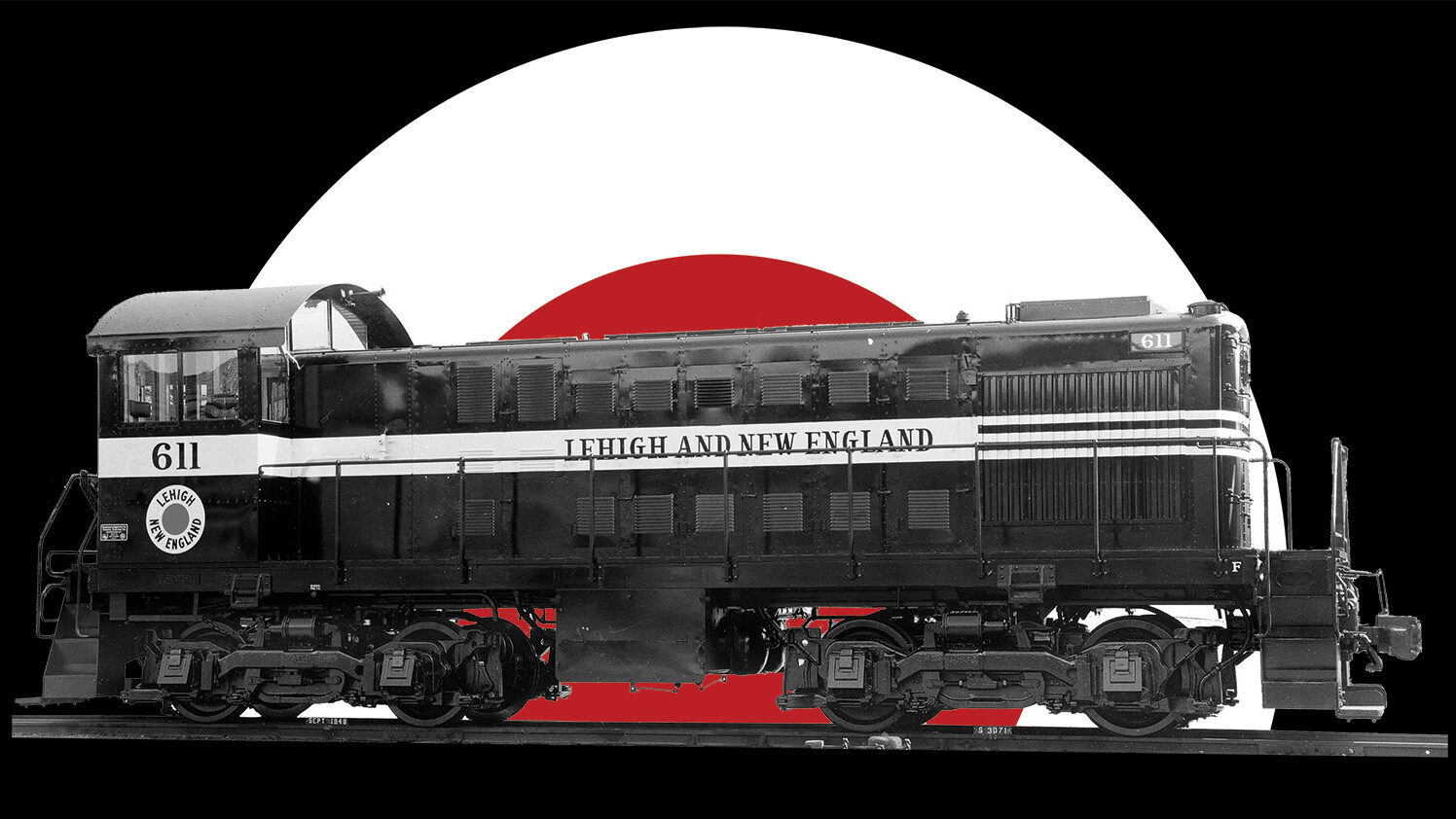
The Railroad & Industrial Preservation Society, Inc, (RIPS) is intent making sure one particularly historic S-2 not only survives but becomes an operating testament to the heyday of American heavy industry: Lehigh & New England Railroad Alco S-2 No. 611.
We believe No. 611 is one of the most historic diesel-electric locomotives in the USA. How did a once-ubiquitous locomotive become a rarity? That’s the incredible story of No. 611’s journey. Once thought lost, the locomotive is now a touchstone to US history.
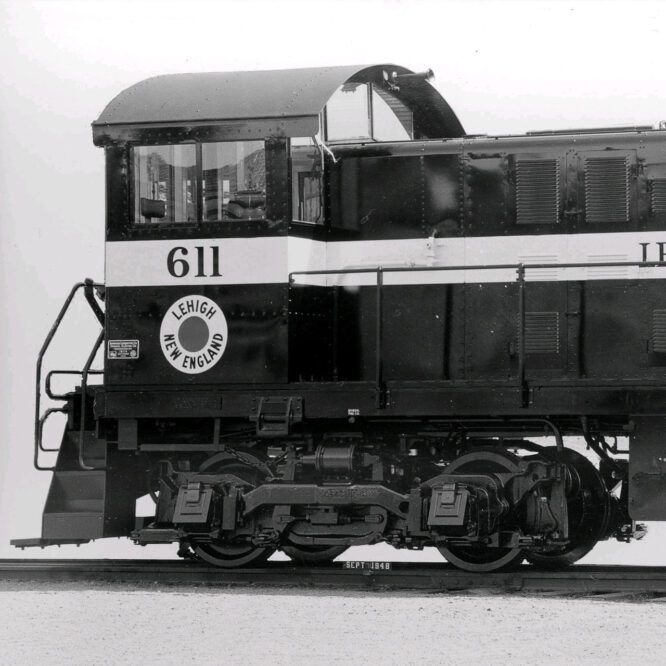
No. 611 rolled out of the American Locomotive Company (ALCO) erecting shops in September 1948, part of a pivotal moment in American industrial and transportation history: the rapid post–World War II transition from steam to diesel power and the modernization of heavy industry nationwide.
The locomotive was part of an order from the Lehigh & New England Railroad (LNE), a key route that served the anthracite coal, slate, and cement industries in eastern Pennsylvania, crossing New Jersey and ending at the “New England gateway” in Maybrook, New York. Ironically, despite its role as a coal road, the LNE was one of the first American railroads to fully dieselize. No. 611 was part of that progression. For most of the 1950’s the locomotive worked the huge Pen Argyl, PA freight yards marshalling cars of eastern Pennsylvania minerals and products.
When the LNE shutdown on October 31, 1961, the future for No. 611 was not clear. The scrapper selected to remove the LNE leased the locomotive for the term of the project, using it to destroy the railroad it was built to serve. Once the tracks were reduced to nothing more than cinder trails, No. 611 was out of work again.
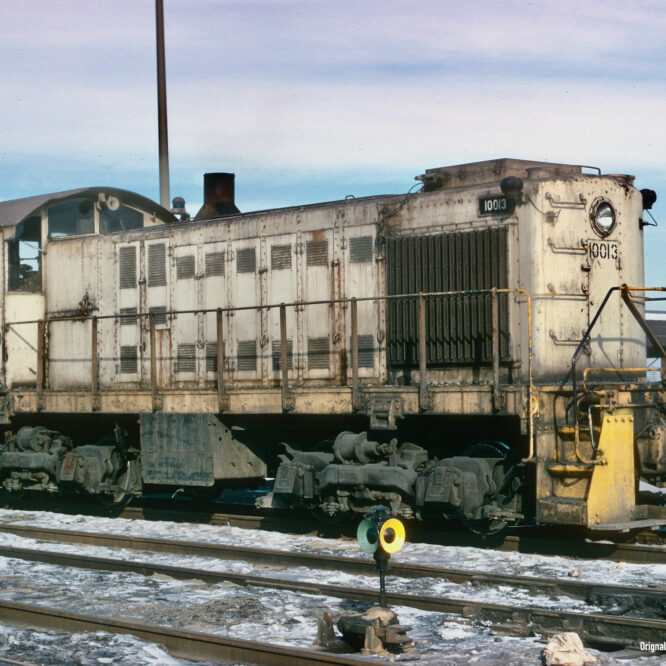
In the first of many fateful twists, No. 611 was not sold off with other groups of LNE locomotives. Instead, the S-2 was acquired in a one-locomotive transaction by the Ford Motor Company and assigned the number 10013.
As Ford No. 10013, the locomotive served the automobile giant’s River Rouge steel mill in Dearborn, Michigan. For over a decade, No. 611/10013 operated as a central element of Ford’s production process. After leaving the employ of Ford, the history of the locomotive gets murky.
Conventional wisdom says No. 611 was purchased by a private owner for a proposed Toledo, Ohio steel mill museum that never materialized. Apparently, the locomotive was stored on the Toledo, Lake Erie & Western Railroad but no photographs or other proof have surfaced. During these “missing years” the locomotive’s identity as LNE No. 611 slipped into mystery. Combined with its under-the-radar status, railroad historians assumed the locomotive fell to the scrapper’s torch just like every other LNE diesel.
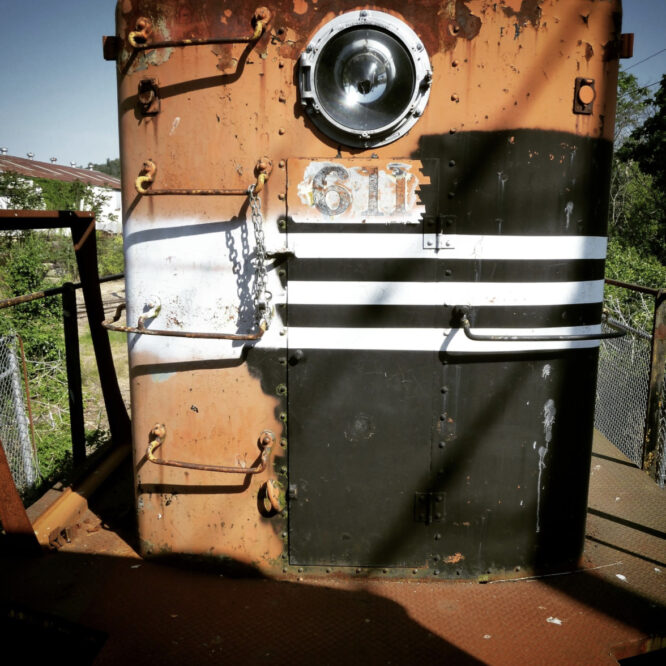
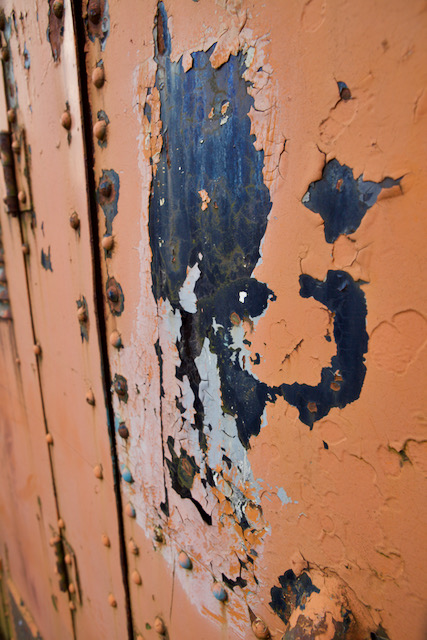
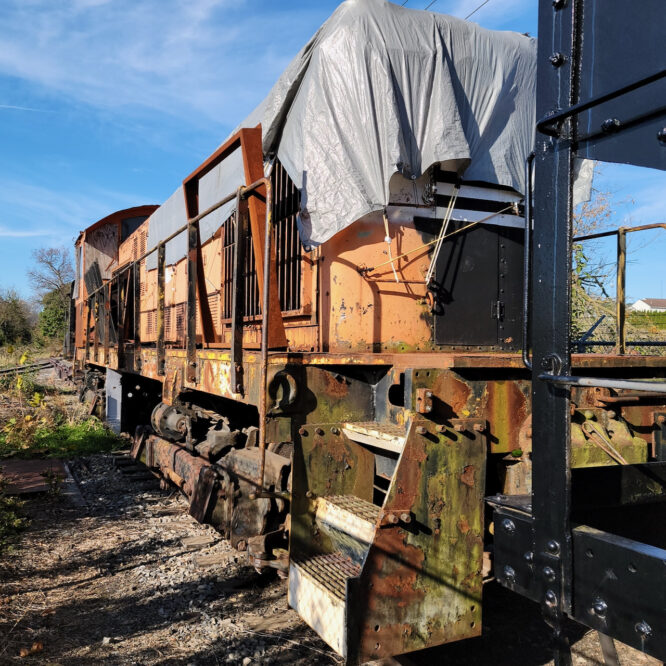
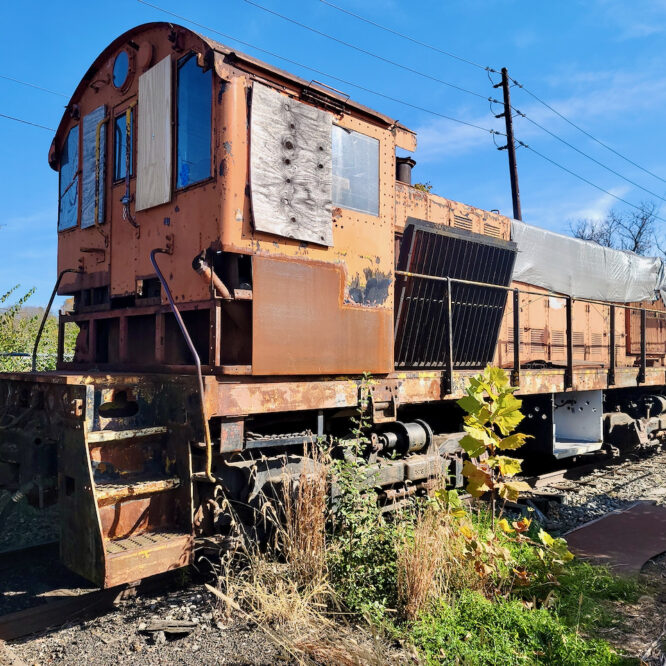
Decades later, a non-descript orange S-2 began servicing a small grain mill in Emporia, Indiana. Bereft of markings, the little switcher was just one of many older locomotives sent into light industrial service. However, beneath at least 6 layers of paint the ghost of Lehigh & New England lettering was still visible to those who bothered to look.
Fate struck again as word spread that an LNE survivor – the last LNE diesel survivor – had been found. Enthusiasm from historians in eastern Pennsylvania led to the formation of a new LNE preservation group that eventually purchased the locomotive and returned it to PA for restoration on the Allentown & Auburn Railroad. Without this effort, No. 611 likely would have been lost for good. Everything possible for No. 611 in the future stems back to the dedicated people who took a risk on bringing the locomotive home to Pennsylvania.
Being the last surviving LNE diesel-electric gives No. 611 esoteric historical clout, but that alone doesn’t elevate the locomotive to iconic status on a national scale. That relevance comes from its decades of service to some of the most important industries in US history: mining, automotive, agriculture, and railroads.
Coal, slate, cement, steel, grain, plus countless other commodities and finished product have been coupled to No. 611 over the years. The locomotive’s resume reads like a catalog of industries that shaped America.
Among all the other S-2’s built, this pedigree makes the locomotive unique. And with the number of extant S-2’s dropping steadily, there is a strong argument to be made that No. 611 is the one that deserves to stand as the torch bearer.
On October 31, 2021 – 60 years to the day of the LNE’s abandonment – stewardship of No. 611 passed to the nonprofit 501(3)c Railroad & Industrial Preservation Society, Inc. (RIPS). The transition put No. 611 in the hands of a board consisting of professional railroad operations experience, financial management expertise, and nationally recognized preservation and communications credentials. The Berkheimer Foundation, Allentown & Auburn Railroad, and the Lehigh Valley Chapter of the National Railway Historical Society continue to be consistent supporters of the project. RIPS has succeeded in attracting new private donors and institutional partners, including the Norfolk Southern Corporation.
Volunteer. Donate. Support the continuing legacy of No. 611, a true American legend.